
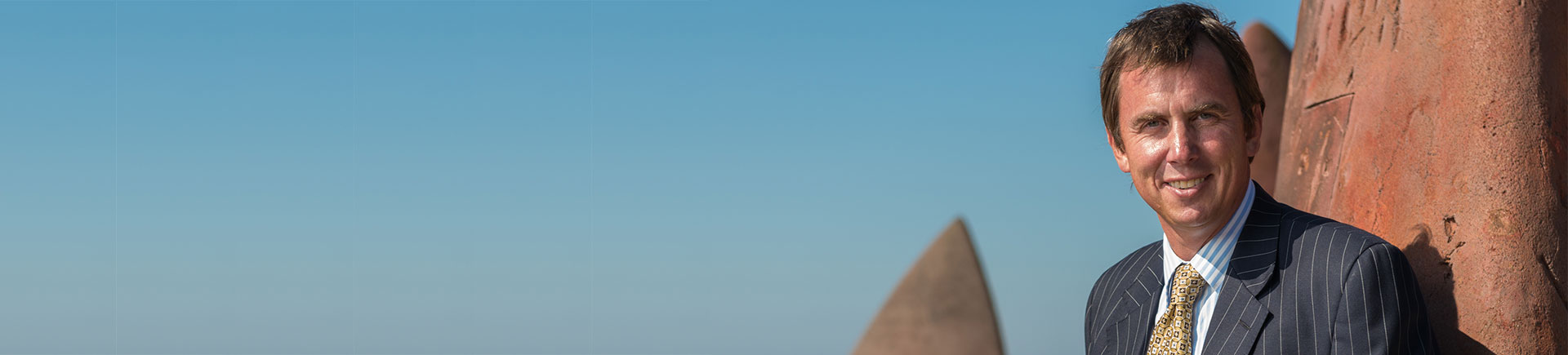
About Tom
Get to know Tom betterI want my children to have a choice – that is, to be able to work and live in this wonderful environment or, if they choose, to live somewhere else in the world. And when they decide, a choice to return.
What I don’t want is for my children to feel they have no choice but to leave in order to fulfil their employment, lifestyle aspirations and potential.
Commuting is hard on both the individual and their respective family. I should know, I’ve done it continuously for the last 15 years.
Eventually, I hope my children will choose to both live and work here because the Geelong region will offer them a rich, cultural and rewarding place to live, including sophisticated employment opportunities.
What are the key issues facing the Geelong region
- Rail connectivity with Melbourne – it’s now a disaster, and a clear and present danger to support Greater Geelong’s on-going growth
- The lack of relatively sophisticated employment opportunities available to our youth – we don’t want our youth to leave, feel that they have no choice but to leave, or be denied the opportunity to realise their potential. If they leave, we want them to come back because they want to come back, to bring their experiences with them, to have the opportunity to leverage off those experiences, to invest back in the local communities and industry, and then raise their own families in the region.
- Public transport availability and connectivity across the Bellarine – it is pathetic and must change.
- Lack of leading infrastructure spending to support population growth as it occurs (not after), most particularly in our road network capacity, deteriorating road maintenance, community services, and amenity support of our short stay tourism markets (car parking availability and public transport support to our beaches being just one example).
- The fact there is still no clear plan for the Geelong region, notwithstanding the work done to develop the 30 year vision, A Clever and Creative Future. I am big believer In Our Future and the aspirations that have been articulated, and was an industry partner with Council in the development of this important body of work. But Our Future is a vision, not a plan to get us there, nor does it articulate the urbanisation of that vision.
- And my number one local pet hate are the mosquitoes. We have to do better than the status quo preventative action. I’m sick of my children being walking blood banks.
The growth story, our identity, future investment and jobs?
We can’t keep continuing to put people into Melbourne and Sydney – This country needs more emerging cities. Geelong, Newcastle and Wollongong are the most likely prospects – with the Geelong region at the top of the list.
Geelong because of its close physical proximity to Melbourne, incredible natural attributes, existing heavy infrastructure, relatively affordable housing, access to water, untapped potential, current growth, government policy settings for regional Victoria and general desirability for people to want to live in the region – particularly people who are aspirational, young, educated, entrepreneurial, with money to invest in new business and employment creating opportunities.
The reality is that Geelong is growing strongly now; even Council this year recognises that the city is growing at just under 2.5% per annum – in my view it is much stronger than that, more like 3-3.5% per annum.
Even if we were to accept just 2.5% per annum growth moving forward – a fraction of the 5% per annum that the City of Wyndham is growing at – Geelong will grow from 240,000 people now to around 850,000 in 50 years’ time. In 60 years, we will be over 1 million people. This could happen much earlier.
We can’t have uncontrolled growth and a lack of new infrastructure support. Nor can we deny growth. We need to accept that reality, plan for it and take control of our destiny. And for that we need a plan.
I want to drive a growth agenda with a clearly articulated plan. And to give our children, and the generation to follow, choice.
That’s why I’m running
We want and need to continue to have our own identity – we don’t want to become an extension of Melbourne, where that city looks to this region to relocate its problems. This is Greater Geelong (including the Bellarine), not Greater Melbourne.
At the same time we can’t ignore our critically important symbiotic relationship with Melbourne. This is again what makes us different. We are now a hybrid of both Melbourne and regional Victoria, as well as a bridge and gateway to the State’s west.
We need to advocate to governments, federal and state, about how we want this city and region to become, not what we have been.
We need to look forward.
We need to excite our politicians, lead them, open their minds, embolden and empower them, and ultimately get them to act and win the day in a limited universe of available capital in which we are all competing, whether that be from the public or private sectors.
And of course we need to get the business sector to continue to invest in the region, not just in the industries of today, but the emerging industries of tomorrow. It is all interrelated.
My vision and plan for Greater Geelong
In saying the obvious, our Geelong region is unique for many reasons.
From a municipality perspective, we have the second largest population in Victoria. But no other municipality has the breadth of elements that comprise our region – we have a CBD heart, vibrant inner suburbs, an active port, heavy industry, a substantial commercial airport (on the cusp of providing international visitor and freight services), heavy rail (including standard gauge), manufacturing, professional services, growth areas, agriculture, tourism, rapidly growing population, sea, surf and bay, all situated around a glorious northern water body while located only 75 km from a city of 4.5 million connected by freeway and rail that is heavily utilised by commuter traffic.
And that city of 4.5 million situated on our doorstep is currently growing by at least 1 million people every 10 years.
There is nothing like our municipality in the state – indeed we are like a mini Victoria, and in my view we need to conduct ourselves as such. But along with all this depth and potential comes challenges, unrealised opportunities and community expectations.
To meet these challenges and make the most of our incredible advantages, we need not only a vision, but also a plan that reflects the urbanisation of that vision.
While leveraging off and having regard to Our Future, and importantly reflecting our reality, I have prepared (with some significant professional support) a plan that provides for an illustrative representation of my vision for Greater Geelong – I call it “Geelong @ 1 million | A Clever and Creative Place, a 21st Century City”.
Next Steps
I want us to start planning for the day when Geelong’s population reaches 1 million people.
In my view, this growth is inevitable so we need to start planning for it now. It is not going to happen overnight, but it is going to happen. Based on current growth predictions, Melbourne’s population is likely to grow by close to 3.5 million people over the next 35 years (to around 8 million people) and that city is going to look to regional Victoria to take part of the load.
The Geelong region, including the Bellarine, will be front and centre of that endeavour. Indeed it is happening right now with all sides of politics talking to policy settings to encourage that very objective. In my view, a population of at least 1 million people in the Geelong region over the next 50-70 years is inevitable, and it may occur much sooner. It will bring economies of scale, new investment and opportunities, and it will bring challenges.
We need to start articulating a plan to not only control our destiny, realise our potential and lead our politicians with confidence, but also to place the necessary pressure on the State and Federal governments to build the infrastructure that the Geelong region will need to accommodate rapid population growth as we move to 1 million people. We need that infrastructure delivery to lead the population growth, not lag it. The last thing we need is Melbourne’s mistakes and issues being transported and mirrored in Geelong and the Bellarine.
My plan is predicated on a number of constraints.
I have stipulated that the municipality needs to accommodate 1 million people, having regard of course to the exiting urban footprint, and be contained within the municipal boundaries other than for provision of some growth in Torquay (it is silly to consider otherwise, and Torquay is an important interrelated part of the Geelong region’s growth story and urbanisation).
In addition, I have required a new gateway entry to Geelong via Point Lillias and across to Point Henry utilising a bridge tunnel concept to accommodate the shipping channel to Geelong Port, similar to the Oresund bridge tunnel linking Sweden and Denmark. Corio Bay and Point Henry would in effect become the new gateway into Geelong.
This bridge tunnel would be required to not only accommodate road transport, but also a rail loop servicing an intra Geelong metro rail network. It will be multi-modal.
In addition to the intra city/region rail system, I’ve also proposed a new fast rail service linking Geelong to Melbourne. For the purposes of this plan, I am proposing that the Fast Rail be based on the Hyperloop concept or the Japanese Maglev system.
The Fast Rail would eventually extend to Colac, Warrnambool and Portland, thereby opening up a large part of Western Victoria to further urbanisation, growth and employment opportunities.
The new conventional intra-rail loop would now be focused on servicing the needs of Greater Geelong rather than for inter-city commuter movements, and is proposed to extend to both Drysdale and Ocean Grove, as well as Torquay.
As a result of these infrastructure investments, and a focus on a north/south intra metro rail system, northern Geelong would accelerate its evolution to being an aspirational place to live, with higher living densities, employment opportunities, housing gentrification and reinforcement of east/west links to the Corio Bay edge, bringing the water to the people. We have to make better use and accessibility of our stunning bay.
The plan also provides for a number of light rail services to service both existing and new emerging communities. The current ring road has been extended to Point Henry, and I have also required a new outer metropolitan ring road as a hard boundary to the city.
These ideas or concepts are not new (and a number have been recently in the public domain), but they were always good ideas, and in respect to the envisaged road infrastructure, are consistent with a VicRoads 2040 proposed road plan.
New intra Geelong ferry services are also proposed, with a central hub situated at Cunningham Pier.
I have also adopted Infrastructure Victoria’s “Point Wilson” option for Victoria’s new container port.
A number of dedicated new larger scale employment precincts have been proposed. There precincts would be in addition to the more traditional and complementary lower order employment areas in conventional residential/urban areas.
With these key infrastructure constraints, the proposed plan has been framed.
What became evident during the development of the plan was that to accommodate a population of 1 million, and despite proposed increases in people densities in the inner Geelong city area, the urban footprint would not only need to pivot west, but also north and east into the Bellarine. Moreover, a pivot to the east would make much better utilisation of the proposed bridge tunnel across Corio Bay.
This will be confronting for the Bellarine, but at the same time the load and extent of change is shared across the whole municipality, and there is, in my view, balance and logic to the plan.
Self-evidently, to accommodate this growth, a great deal of new land will need to be re-zoned to permit further urbanisation of the region (including residential, employment, retail, recreational parkland, sporting complexes and other community facilities).
An obvious consequence of the re-zoning is that some land owners will have windfall gains. A critical part of my plan is that those windfall gains are taxed at a meaningful level, and that 100% of the revenue raised is returned to Greater Geelong for infrastructure support and delivery.
Specifically, I propose that from this point forward, any land that is rezoned within the municipality, that directly results in a value uplift, will be subject to a Value Capture or Special Land Tax (VCT).
The level of the tax would be applied at 50% of the uplift attributed to the re-zoning (to be independently determined), and would be payable at the first liquidity (cash) event after a Development Plan (DP), Precinct Structure Plan (PSP) or similar has been approved by the responsible planning authority and which allows development consistent with the underlying new zoning.
It would in effect be like Melbourne’s GAIC, but would apply across the entire region/municipality, not just “growth areas”. Developers and/or land owners would still be subject to the usual developer contributions currently payable (in addition to the VCT if applicable), which are used to fund community infrastructure, roads, etc. within their respective projects.
Also, I propose that Council advocate to the Victorian State Government that a percentage (at a meaningful level to be agreed, but say 50%) of all collected property taxes in the region (specifically, property stamp duty and land tax) be set aside for shorter term infrastructure funding and special project support in the municipality. This would provide Greater Geelong with a growth tax and a reliable source of asset funding outside that of standard Council rates. The usual annual State Government grants to Council would of course need to be reviewed in this context.
Notwithstanding my proposed tax arrangements, there would still be a requirement for considerable specific purpose grants from both the Victorian State Government and the Commonwealth to fund the big picture infrastructure such as intra rail, fast rail and the proposed bridge tunnel – they would be beyond any local funding capacity and should be considered infrastructure of both state and national significance.
In addition to the big picture elements of the proposed plan, I have incorporated a number of proposed specific shorter term projects of significance and directly relevant for implementation today, or in the very near future.
Now see my plan and proposed projects of immediate application.
To deliver this plan and envisaged projects, I need your support and mandate. So Vote 1 Tom Roe as one of your three Councillors for the Bellarine.
Who am I?
The individual
I see myself as a Victorian rather than being from a particular town or place.
I am also a big believer in the Australian federation, with the emphasis on federation as distinct from a centralised unitary state. Most of my family was here before Australia was federated – we were all Victorians.
While a believer in Australia’s federation as it was envisaged by our forefathers, most particularly as to the separation of responsibilities between the State and Commonwealth (including fiscal), what we experience today is something quite different. This relates primarily around the way our taxation is applied, Victoria’s share of that tax base, and the Commonwealth’s interference is State matters that were never intended to be part of the Commonwealth’s remit.
This status quo impacts on, in particular, the funding and delivery of infrastructure in Victoria, including, most importantly, the Geelong region.
My family has been involved in Victorian politics over many generations. My great great grandfather Niel Black became a member of the Victorian State Parliament shorty after Victoria became a self governing colony, with responsible government, in the mid 1850s. My great grandfather Steuart Black was a state politician for Western Victoria at Federation in 1901. And my grandfather Russell Stokes was a Victorian state member for nearly 20 years. He was a founding member of the Liberal Party in 1944.
I have been a member of the Liberal Party, but am no longer.
I have a good working relationship with all of the Geelong region’s politicians (State and Federal) as well as Council‘s Administrators and its executive leadership team (most particularly with my recent involvement as an industry partner for the development of Our Future), and will be standing as an independent candidate in this Council election.
My family
Sarah and I brought our young family, including two children, to live on the Bellarine more than 15 years ago, and we’ve had one child since moving here.
All our children have grown up on the Bellarine and went to school at Barwon Heads Primary. My eldest child is now just about to leave university, the middle child is just about to leave secondary school, and the youngest left Barwon Heads Primary only last year to start his Year 7.
I enjoy golf, fishing and boating, watching the kids’ sports and have just taken up superkarting, which is like very poor man’s Formula 1.
Sarah, my wife, runs a catering business based at Ocean Grove.
The professional life and my investment in the region
I am a land economist, investment banker and joint venturer, with a primary focus representing capital invested in the residential development sector.
I have a Bachelor of Business from RMIT University, and am the responsible manager and key person for an Australian Financial Services Licence (AFSL) in my role as a director and part owner of Gersh Investment Partners Ltd.
Recently, I have been Chair of the Urban Development Institute of Australia’s (UDIA) Geelong Chapter. T
Through my business interests I have invested heavily in four fully approved and going concern development projects throughout the Geelong region, both personally and via the capital I represent. Those projects are significant in scale providing hundreds of jobs and most have very strong land rehabilitation and reformation elements.
For example, at the moment one of the projects I represent (Balmoral Quay) is investing approximately $5 million in the public realm, which includes the construction of a public walkway between Rippleside and St Helens Beaches, and the re-nourishment of the beaches.
Gen Fyansford is another project with extensive land remediation . It will yield, during its life, in the order of $500 million of construction activity including civil works and housing delivery.
The Point at Point Lonsdale is further significant project with an estimated $300 million of construction activity and extensive environmental remediation, and will ultimately provide substantial community access (via approximately 20 km of walking paths) and a circa 5 km tidally flushed water loop), with protected land gifted back to the City of Greater Geelong.
In short
- I’m a good all-rounder, passionate and don’t like giving up.
- I have a great deal of life experience, extensive business background, and am heavily invested in the region
- I can sell a convincing story for investment in the region, have done it myself, have a proven track record in delivery of external investment into Greater Geelong, and more recently a track record in delivering physical outcomes (including in the public realm) as the local development projects continue to mature.
- By nature and professional background, I am a joint venturer. I have to work with all types of people, private and public sector, some who are very difficult, while still achieving outcomes. I work with people, I work with money and I work with ideas, and I bring them together to realise an objective.
- While I am by nature driven by the big picture need and reality, nonetheless my family I have lived on the Bellarine for many years, and I have strong empathy with the sensitivity and issues that our community lives with day to day.
The nature of my professional work and my role as Chair of the UDIA’s Geelong Chapter has meant they I have had to deal with many of the local institutions and lobby groups, including with the local politicians and Council. I have good working relationships with all, even when we don’t agree from time to time.
My key messages
- Geelong is growing strongly but our infrastructure capacity is not keeping pace
- We need to embrace growth, and articulate a plan, not just an aspirational vision. We must ensure we control our destiny, and have the tools to advocate and win the funding support to deliver the infrastructure and employment creating opportunities we need.
- We need to ensure our youth have choice to realise their potential and aspirations in this region. Choice to stay, choice to leave and choice to return. Otherwise too much of our youth will continue to leave and not return, or fail to realise their potential by staying in this region.
- We need to maintain our identity while accepting the critically important relationship with Melbourne, its market scale, the opportunities the city provides and the pressure to accommodate its scale of population growth. Hopefully this will give us the best of both worlds.
- We must improve our transport linkages, both public and private, make the best of our natural advantages, existing infrastructure, proximity to Melbourne and the endeavours of our forefathers, support our traditional industries and create the employment opportunities of the future.
In summary, we are going to change – we need to make sure that change is the very best we can secure. Bad change is not acceptable, we need good change that is constantly evolving and responsive to the needs of our community while accommodating and supporting the population of tomorrow.